The Art of the Italian Antipasto Board
Antipasto means, quite literally, before the meal. Anyone who has sat through a proper Italian lunch knows how loosely that gets interpreted.
In theory it's a small opening act: a few slices of something cured, a piece of cheese, some olives, a glass of something cold while the pasta water comes to the boil. In practice it's where the afternoon gets decided. Put out a good antipasto and nobody minds how long the next course takes. Put out a great one and there's a real risk the next course never happens.
As the weather warms and lunches start drifting outdoors, this is the course that does the most work for the least effort. Nothing on it needs to be cooked to order or kept warm. It just needs to be balanced.

Four things, in balance. The difference between a pile of good food and a proper antipasto is contrast. You want something salty, something creamy, something crunchy and something fresh, so every mouthful has somewhere to go next.
Salty is the cured meat and the olives — prosciutto torn rather than laid flat, a few slices of salami, and olives somewhere in the middle. Ours are Crushed Olives: Australian Kalamatas crushed with herbs, spooned straight from the jar onto bread or alongside the meat.
Creamy is the cheese. One soft — burrata, fresh ricotta, a young pecorino — and one firm enough to break into shards with the point of a knife. Two is plenty. Past three, people stop tasting any of them.
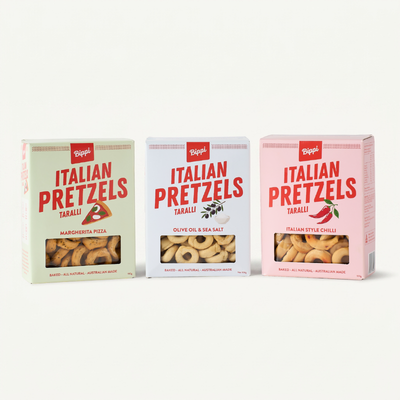
Crunchy is bread, grissini and, in the south, taralli — the small baked rings found on tables from Puglia down to Calabria. The Taralli Trio covers all three of ours, Olive Oil & Sea Salt, Chilli and Pizza Margherita, tipped into one bowl and left for people to sort out.
Fresh is what stops the board feeling heavy: cherry tomatoes, thin wedges of fennel, radishes, and a few marinated vegetables — artichokes, roasted capsicum, zucchini — with lemon squeezed over the top just before it goes out.
Antipasto means before the meal. Nobody has ever said how long before.
Then, a little heat. Most southern tables have a jar of chilli on them somewhere, and antipasto is where it earns its place. A spoonful of Italian Style Chilli – Hot over burrata, a little on bread under a slice of prosciutto, or stirred through the marinated vegetables does the same job the lemon does: it wakes everything else up. For the full version, our Chilli & Tomato Burrata Board is the one we'd put in the centre.

How to lay it out. Start with the bowls and jars, because they're the anchors, then build the meat and cheese around them in loose folds. Fill the gaps with bread and taralli, finish with the fresh things, and leave spoons and a knife where people can reach them. Abundance matters more than neatness. A board should look as though there's slightly too much on it — that's what tells a guest they're welcome to keep going.
And when the next course arrives, leave it out. Antipasto doesn't really end. It just gets pushed a little further down the table.